
News
How is the right sheet selected?
2026-06-20 · Solutions
The right sheet type is determined by assessing not only thickness but also structure, loads, support spacing, and installation conditions.
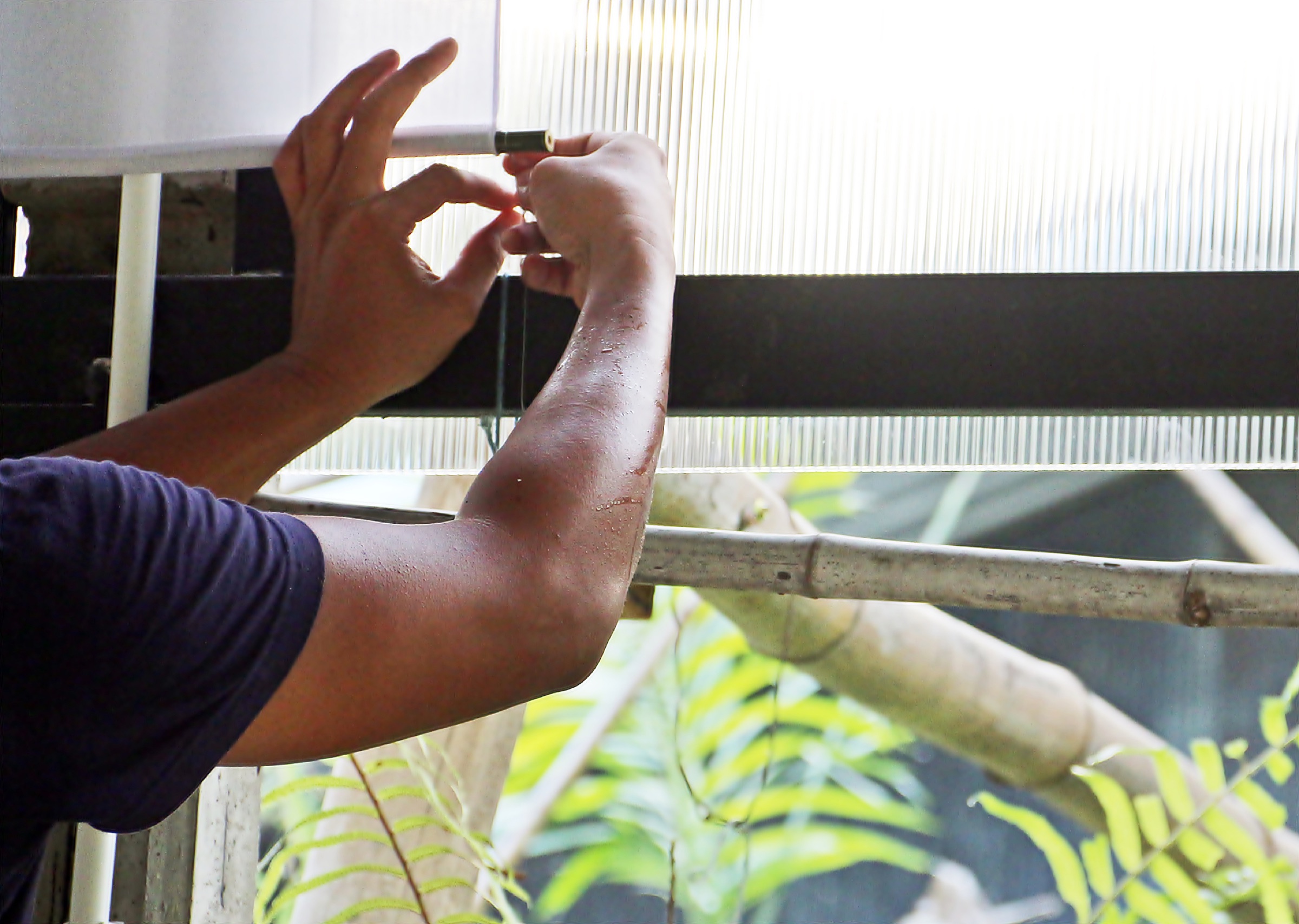
When selecting multiwall polycarbonate, sheet thickness is usually considered first. It is an important parameter, but thickness alone is not enough to determine how the material will perform in a particular structure.
Even sheets of the same thickness can have different internal structures, weights, stiffness, and thermal properties. Product selection therefore starts not with one number in a technical table but with the project as a whole.
The intended use sets the direction for selection
The first requirement is to understand what function the polycarbonate will perform. Sheets can be used for roofs, walls, façades, greenhouses, canopies, industrial rooflights, and other light-transmitting structures.
The priorities differ in each case. One project may call for high natural-light transmission and low structural weight. In another, stiffness, thermal insulation, or resistance to the expected loads may matter more.
The intended use narrows the range of possible products, but the structural data must still be assessed before the final decision is made.
Internal structure matters as much as thickness
Multiwall polycarbonate sheets are classified by the number of walls and their internal configuration. Different structures give a sheet different properties even when its overall thickness is similar.
Twin Wall sheets are more commonly used in lightweight glazing and covering systems where low weight and natural-light transmission are important.
Triple Wall sheets and Triple X sheets reinforced with X-shaped partitions may be considered for structures requiring greater stability and resistance to environmental loads.
Five Wall sheets have a multi-layer internal structure and are therefore used in projects where improved insulation and greater structural stiffness are relevant.
These descriptions help distinguish between product groups but do not replace an assessment of the specific project.
Loads are assessed together with the supports
The suitability of a sheet depends on more than the material itself. Support spacing, spans, roof pitch, fixing points, and the overall load-bearing structure all have a significant influence.
Wind, snow, and other loads specified for the project are also assessed. The same sheet may perform differently in different structures, so technical recommendations cannot be separated from the installation solution.
The final thickness and sheet type must be supported by structural calculations and the technical documentation for the selected product. General product diagrams are intended for initial comparison, not final design.
Optical and thermal properties are assessed
Polycarbonate often performs several functions at once in a structure. It protects against environmental conditions, transmits natural light, and can contribute to thermal insulation. Product selection therefore considers how much light should enter the space, whether diffusion is required, which sheet colour is most suitable, and what thermal properties the project specifies.
A clear, opal, grey, or bronze sheet can produce a different result in the same structure. Colour affects not only appearance but also how much light enters and how it is distributed.
Suitable UV protection is also essential outdoors. Depending on the structure, it may be required on one or both sides of the sheet.
The solution is completed with the right components
The sheet is only one part of the installation system. Connecting, edge-closing, and fixing profiles compatible with the sheet thickness are also selected for the final solution.
Incorrectly matched components can complicate installation, channel protection, or compensation for thermal expansion. Sheets and installation profiles must therefore be treated as one system.
When structural data is provided, it is possible to determine not only the appropriate sheet thickness but also its structure, colour, UV protection, and required components. This assessment avoids a universal choice where a solution adapted to a specific purpose is needed.