
News
What do you need to install polycarbonate?
2026-10-18 · Installation
The watertightness and stability of polycarbonate roofing depend on correctly matched profiles, seals and fasteners.
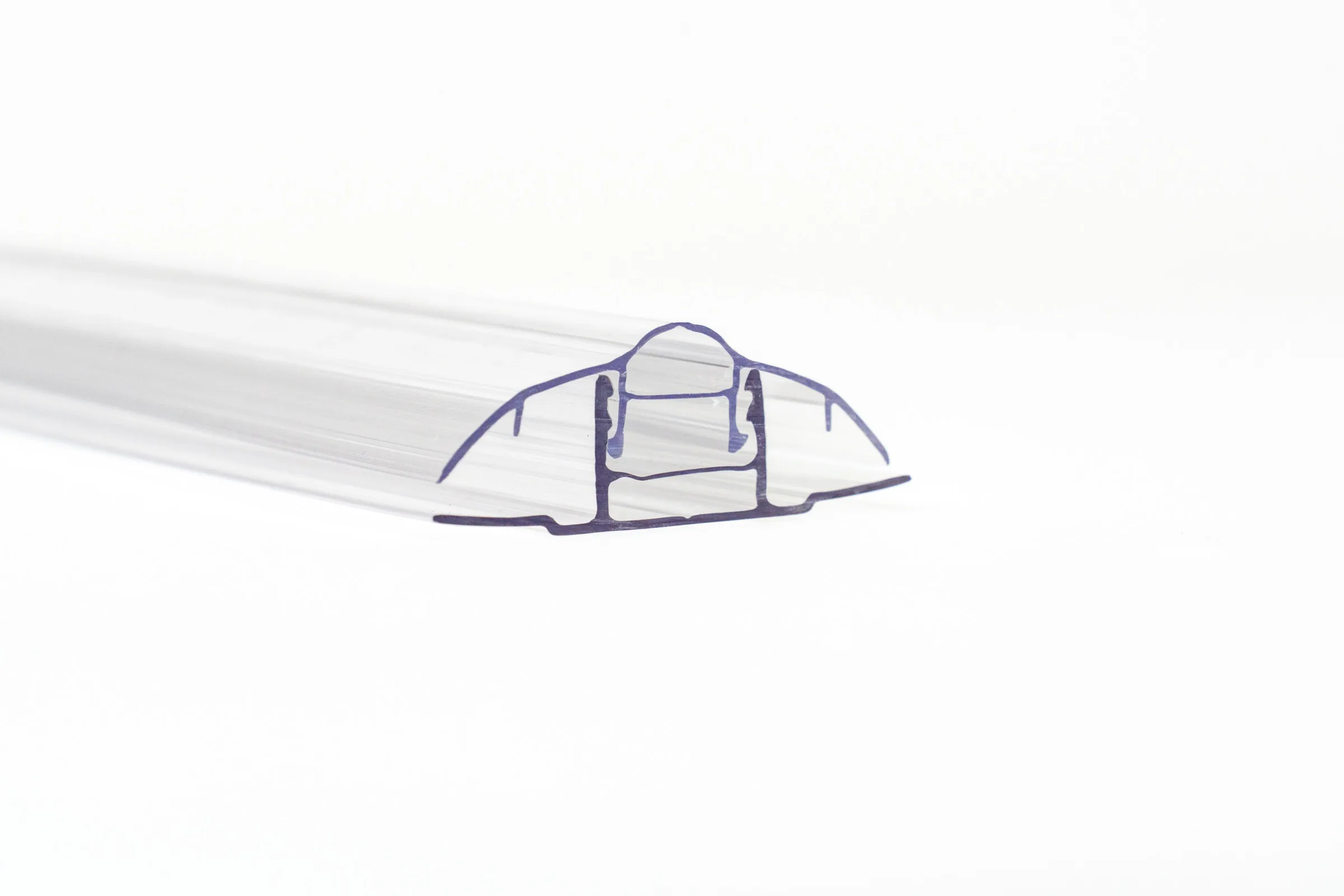
The quality of a canopy or rooflight also depends on details that are barely visible once the roofing is installed. Sheet joints must remain watertight, while fixing points must allow the material to move as temperatures change. Polycarbonate installation accessories are therefore selected together with the sheets, taking the entire structure into account. This resolves issues in advance that would be harder to correct once the roof is covered.
Profiles and seals form the joint
Joining and clamping profiles help secure the sheets and form their joints. The profile must suit the sheet thickness, support spacing and chosen installation method. How far the sheet edge is inserted into the profile and how it is clamped both matter. Matching dimensions alone do not confirm that the selected components will suit a particular structure.
A gasket forms an elastic layer between the sheet and the profile clamping it. It helps seal the joint and protects the sheet from direct contact with hard fixing surfaces. EPDM or other gaskets specified by the installation-system manufacturer and compatible with polycarbonate are used for this purpose. Their material, shape and thickness are selected to suit the joint design.
Fixings must allow the sheet to move
Polycarbonate expands when heated and contracts as it cools. A sheet fixed too rigidly cannot change dimensions freely, which can create stress around the fixing points. Thermal expansion clearances and holes are designed according to the sheet size, temperature changes and installation-system requirements.
When fixing through the sheet, suitable screws and load-spreading washers with sealing gaskets are used. The screw must hold the roofing securely without overtightening it. Hole sizes and fixing positions should not be chosen simply out of habit: they must follow the installation instructions for the particular sheet.
Choose sealants by their composition
Only products whose compatibility with polycarbonate is confirmed by the manufacturer are suitable for additional joint sealing. A general label such as “for glass” or “for outdoor use” is not enough. An unsuitable sealant can damage the surface and encourage fine cracks to develop. When choosing a neutral-curing product, its technical data sheet must clearly state its suitability for polycarbonate. Seal the locations specified in the design without obstructing water drainage.
Specify the accessory set in the design
Before ordering materials, it must be clear how the sheets will be supported, joined and fixed to the structure. These decisions determine the quantities of profiles, gaskets and fasteners. Accessories for different polycarbonate sheets cannot be assumed to be interchangeable: each combination is checked for its intended use. A coordinated set allows installers to follow the planned solution and reduces the need to adapt components on site.
Multiwall polycarbonate installation guide
Installing multiwall polycarbonate? Watch the multiwall polycarbonate installation video on our products page. You will also find a downloadable installation guide in the same section.