
News
Is polycarbonate production environmentally responsible?
2026-06-14 · Solutions
Suitable production remnants and cutting waste are recycled and reused during the manufacturing process.
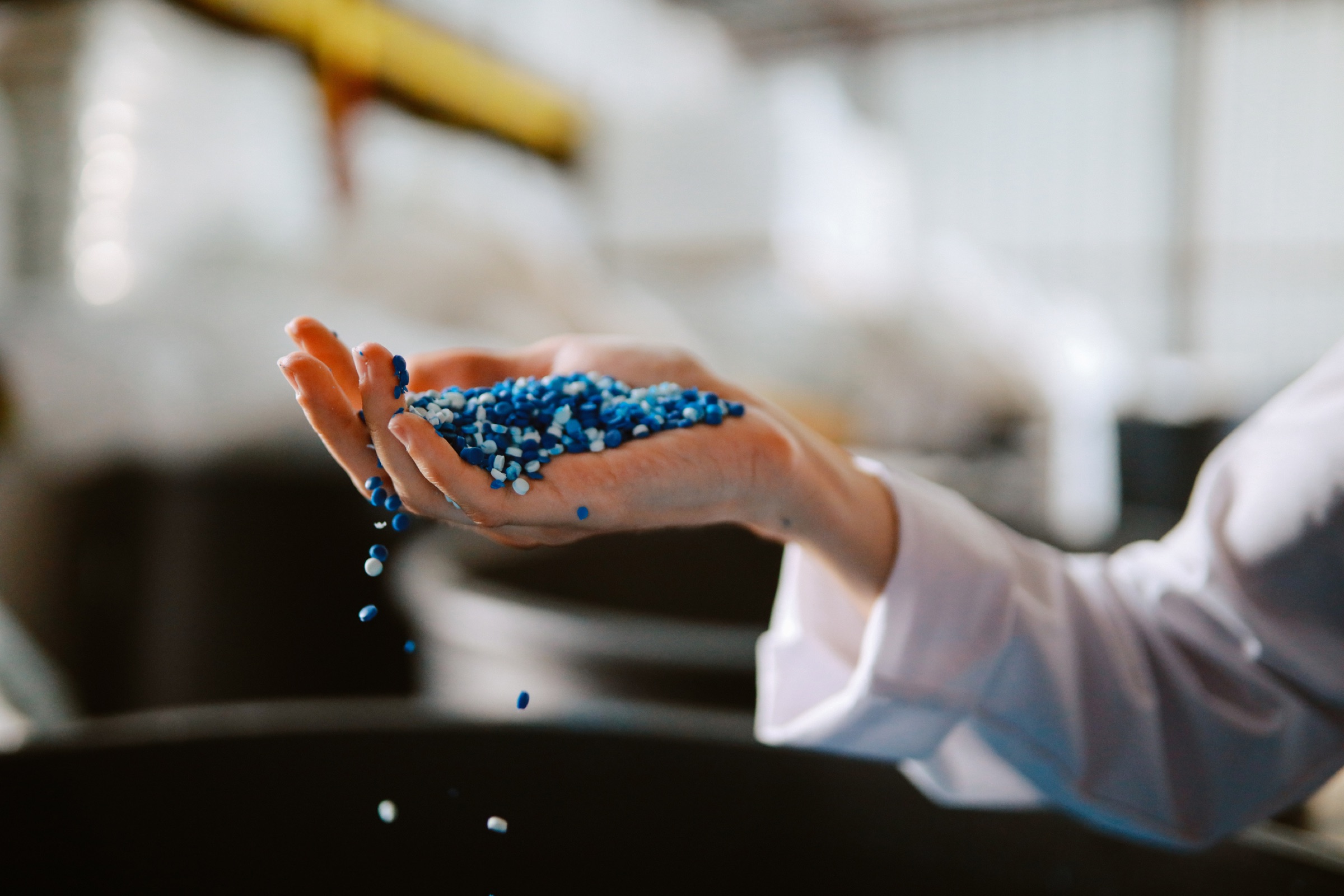
Responsible use of raw materials does not begin only when material becomes waste. It starts with planning sheet dimensions, cutting layouts, and the entire technological process.
Some material remnants are inevitably generated when polycarbonate sheets are formed and prepared. In the Polyplast process, suitable remnants and cutting waste are recycled and returned for reuse. This reduces the amount of waste sent for disposal and makes more efficient use of the raw materials already available.
Fewer remnants before cutting even begins
The efficiency of material use depends not only on what is done with remnants that have already been generated. How the order itself is planned in advance also matters.
When sheet dimensions, quantities, and the cutting layout are agreed precisely, the material can be allocated more efficiently. This reduces the volume of offcuts that cannot be used before sheet preparation even begins.
Advance planning is particularly important for orders requiring several repeating dimensions or pre-assembled sets of sheets. In these cases, the cutting sequence can be adapted to the entire order rather than to each sheet separately.
Remnants are recycled and returned to the process
Polycarbonate is a thermoplastic material and can be recycled when prepared appropriately. Remnants generated during production are returned to the technological cycle when their use meets the requirements applied to the particular product.
Reuse is not a separate operation performed only occasionally. It is incorporated into the daily technological process and planned alongside the primary process. This approach helps reduce losses of virgin raw materials and prevents suitable material from immediately becoming waste for disposal.
Responsible use covers the entire chain
Raw-material efficiency is not limited to forming the sheet. Material use is also assessed during cutting, assembly, storage, and preparation for transport.
Protective films are used on sheet surfaces, and transport solutions are selected so that the products are not damaged before installation. Proper protection reduces the risk that a technically suitable sheet will become unusable because of damage during storage or transport.
At the end of a polycarbonate sheet’s service life, its recycling options depend on the condition and contamination of the material and on the waste-collection system operating in the relevant location.
An everyday practice, not a separate initiative
Responsible use of resources is not a one-off project or a measure separate from the main activity. It is applied when planning orders, forming sheets, cutting products, and managing the resulting remnants.
The greatest impact is achieved when material efficiency is considered at every stage. Dimensions planned in advance help reduce remnants, while suitable cutting waste and production remnants are recycled and returned to the process. In this way, sustainability principles are connected with everyday technological discipline and the rational use of raw materials.