
News
Which polycarbonate should you choose for your project?
2026-09-28 · Guide
The right polycarbonate for a commercial project depends on the structure’s purpose, expected loads, and the required light transmission and thermal insulation.
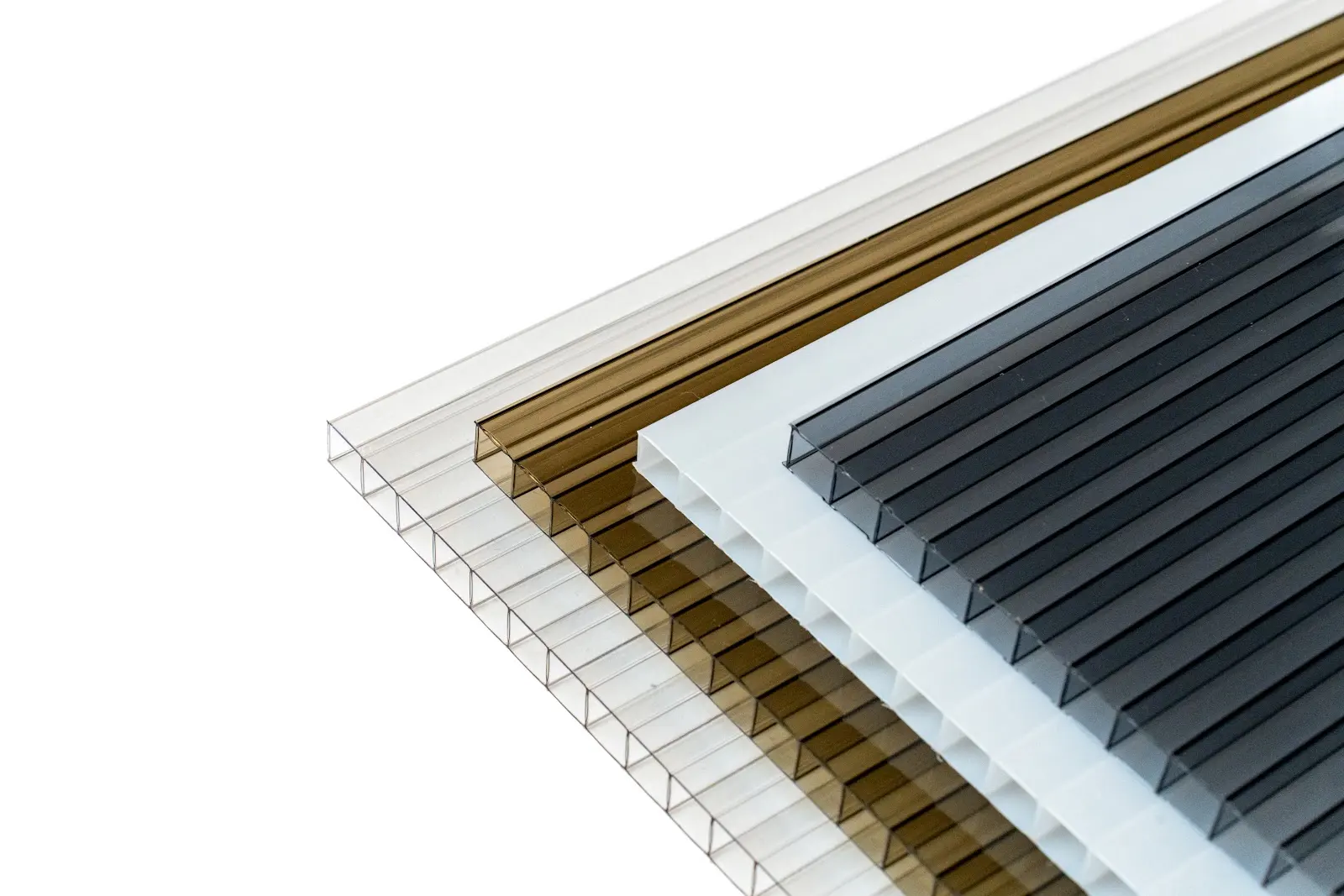
Polycarbonate sheets of the same thickness can differ in their internal structure, weight and thermal performance. In a commercial project, thickness is therefore only one selection criterion. It is important to know where the material will be used, how it will be fixed and what result it must deliver. A clearly defined brief helps select the right product and avoids having to adapt sheets that have already been ordered to a structure they were not intended for.
Intended use determines the material
An open canopy and a skylight in a heated space have different requirements. The first calls for protection from rain and good light transmission; the second also needs thermal insulation. The air channels in multiwall polycarbonate combine low weight with insulating properties. Solid polycarbonate is a continuous material with transparency closer to glass, so it is chosen where clear visibility and high impact resistance are required.
The internal construction of multiwall sheets also varies. Polyplast five-wall sheets are intended for applications that require greater rigidity and better thermal insulation. X-shaped partitions reinforce the structure of Triple X sheets. These differences are reflected in product specifications, which should be compared against the requirements of the particular project.
Assess thickness alongside loads
For roofing, the distance between supports, sheet dimensions and expected snow and wind loads all matter. These factors must be assessed together using the product’s technical data and structural calculations. A sheet thickness that worked well on another site may not be suitable for a new project.
Coordinating sheet dimensions with the support layout makes it possible to plan joints and cutting in advance. It also helps calculate the quantities of material and installation accessories more accurately, so the estimate reflects the intended installation method.
Light and UV protection
A clear view through the glazing and evenly diffused light are different design goals. When choosing a sheet, consider its colour, structure and light transmission. One space may need as much natural light as possible, while another calls for a less transparent surface.
UV protection should be checked separately. It affects the durability of sheets used outdoors. Depending on the product’s intended use and installation conditions, protection may be required on one or both sides. If the protective layer is on one side only, that side must face the sun when installed.
A specification makes offers comparable
When comparing suppliers’ offers, check that the products and included components are equivalent. The cost of sheets is supplemented by joining, sealing and fixing elements. Defining the full material requirement in advance makes it easier to see what each offer includes.
At Polyplast, sheet dimensions, permitted tolerances, thickness, structure, colour and UV protection requirements are agreed before production begins. When the customer provides the project’s intended use, drawings, quantities and requested delivery time, these parameters can be aligned with the planned work. The agreed specification provides a clear basis for production and the next stages of the project.